
 EN
A dial brief that opens with a rendered image and a color name gives a dial manufacturer very little to quote or build from. The render shows intent. It does not show the blank size, the datum, the print method, the ink system, the applied marker geometry, or how the printed edge should relate to a date aperture. Those details are the difference between a brief and a wish list.
A useful dial brief reads more like a route card. It states what the part is made from, how each feature is produced, which dimensions are critical, and how conformity will be checked. It can still include a visual reference, but the visual sits on top of measurable inputs rather than replacing them.
What the dial manufacturer needs before quoting
At quotation stage, a dial manufacturer is not asking for a finished specification package. It is asking for enough information to avoid pricing a different part. A workable starting set includes:
Blank material and thickness, plus the blank drawing with its own tolerances.
A named datum and the features that register to the case, the hands, and any aperture.
Print colors, print method, and the finish underneath the print.
Applied marker type, foot layout, height, and lume requirement.
Expected quantities, batch pattern, and whether the first run is a pilot.
Missing items are not automatically a problem. A manufacturer can help develop them. The problem starts when a missing item is silently assumed. A brief that says "standard blue" and leaves the ink system open will produce a color that meets somebody's expectation and not the brand's. A brief that gives a blank drawing but no datum will leave the shop to choose one, and that choice may not match the case.
Tolerances and registration belong in the brief
Dial printing is a registration exercise. Separate ink layers have to land on each other, and printed features have to land on machined or punched features. A brief that does not state registration tolerance is inviting the shop to use its default, which may be fine for a simple logo and too loose for a minute track that runs close to an applied index. The same applies to the datum. If the brief does not name one, the artwork and the blank can be built to different references.
| Parameter | Typical working value | Why the brief should state it |
|---|---|---|
| Multi color print registration | around plus or minus 0.05 mm | Sets the allowable shift between ink layers |
| Color match against approved reference | Delta E near 1 to 2 | Defines pass or fail at approval |
| Minimum printed line width | roughly 0.1 mm for pad printing | Protects legibility of fine text |
| Bleed past trim or aperture | 0.2 to 0.3 mm | Gives the print a clean edge |
| Datum for index positions | one shared datum | Prevents tolerance stack drift |
General tolerance standards such as ISO 2768 can fill gaps for non critical dimensions. They do not replace dial specific callouts for registration, color, and datum. A brief that leans on a general standard for critical print features is under specified.
Color approval needs a reference, not a screenshot
A screenshot is a light emitting image. A dial is a reflective surface, often brushed, often curved, and viewed under light that changes. Approving color from a phone screen is a common source of dispute because the reference and the part are not measured the same way.
A better brief names the ink system, provides a physical reference or an agreed color standard, and states the finish under the print. It also states how approval will be judged, for example by spectrophotometer against a master sample. Metallic and pearlescent inks deserve an extra note because their appearance depends on flake orientation, which depends on print direction and drying. A brief that treats them like solid colors will leave the result partly to chance.
Inspection and documentation close the loop
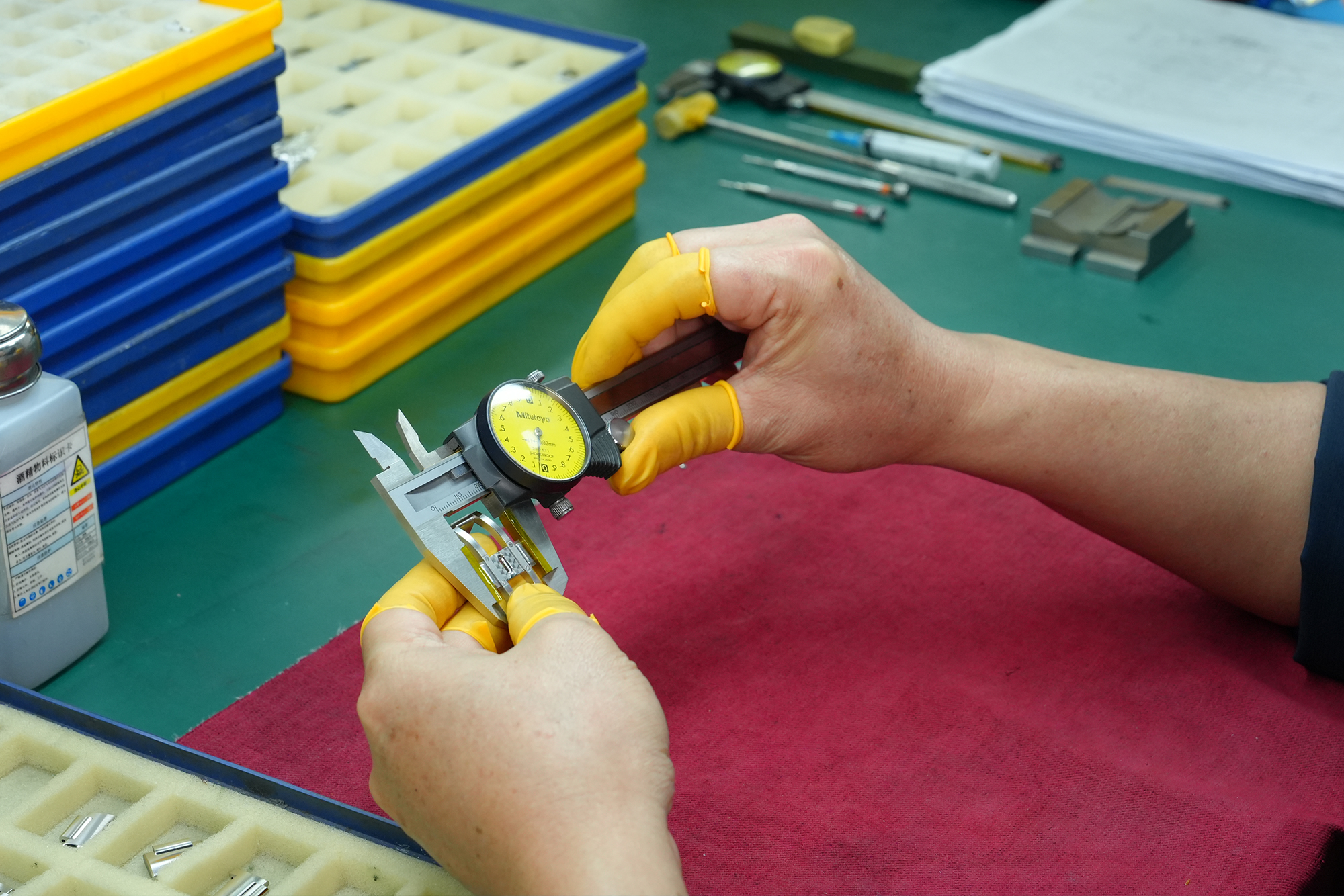
A dial brief should say what evidence comes with the parts. For a simple dial, that may be a dimensional report on critical features and a color approval record. For a dial with applied markers and multiple print layers, it may include registration checks, marker seating checks where relevant, and a sampling plan across the batch.
Inspection requirements should match the risk. Over specifying inspection on a low risk cosmetic dial adds cost without adding control. Under specifying it on a dial with tight registration and applied markers leaves the brand to discover drift at incoming inspection.
One OEM dial project stalled because the brief described the artwork as "print as per file" and left the datum to the supplier. The blanks were located from the outside edge, the artwork was drawn to a nominal centerline, and the printed frame around the date window drifted across the run. The fix was not a new printer. It was a brief that named the datum, added a registration tolerance, and required an in process check after the second color. The first run needed new plates. The next run did not.
Change control keeps a dial project from drifting
A dial brief is not frozen forever. Colors get revised, markers change, and apertures move. The brief should say who approves a change, what counts as a change, and which records get updated. A revised artwork file without a revised color reference is a common gap. So is a new marker supplier without a new foot layout check. A brief that names the approval path and the record set makes those gaps visible before they reach the press.
Small quantities are not a reason to relax the brief. Quality standards can apply the same way across batch sizes, while unit price reflects fixed cost allocation, so a small pilot run will carry a higher piece price. That price difference is normal. It is not a signal that the brief can be looser.
Burriva supports watch dial production and dial inspection with dimensional inspection, staged incoming, in process, and outgoing checks, and segregated workflows with CAD file access controls for confidential designs. For teams preparing a dial brief, a direct conversation about datum, registration, color approval, and inspection points is a practical next step.