
 EN
EN
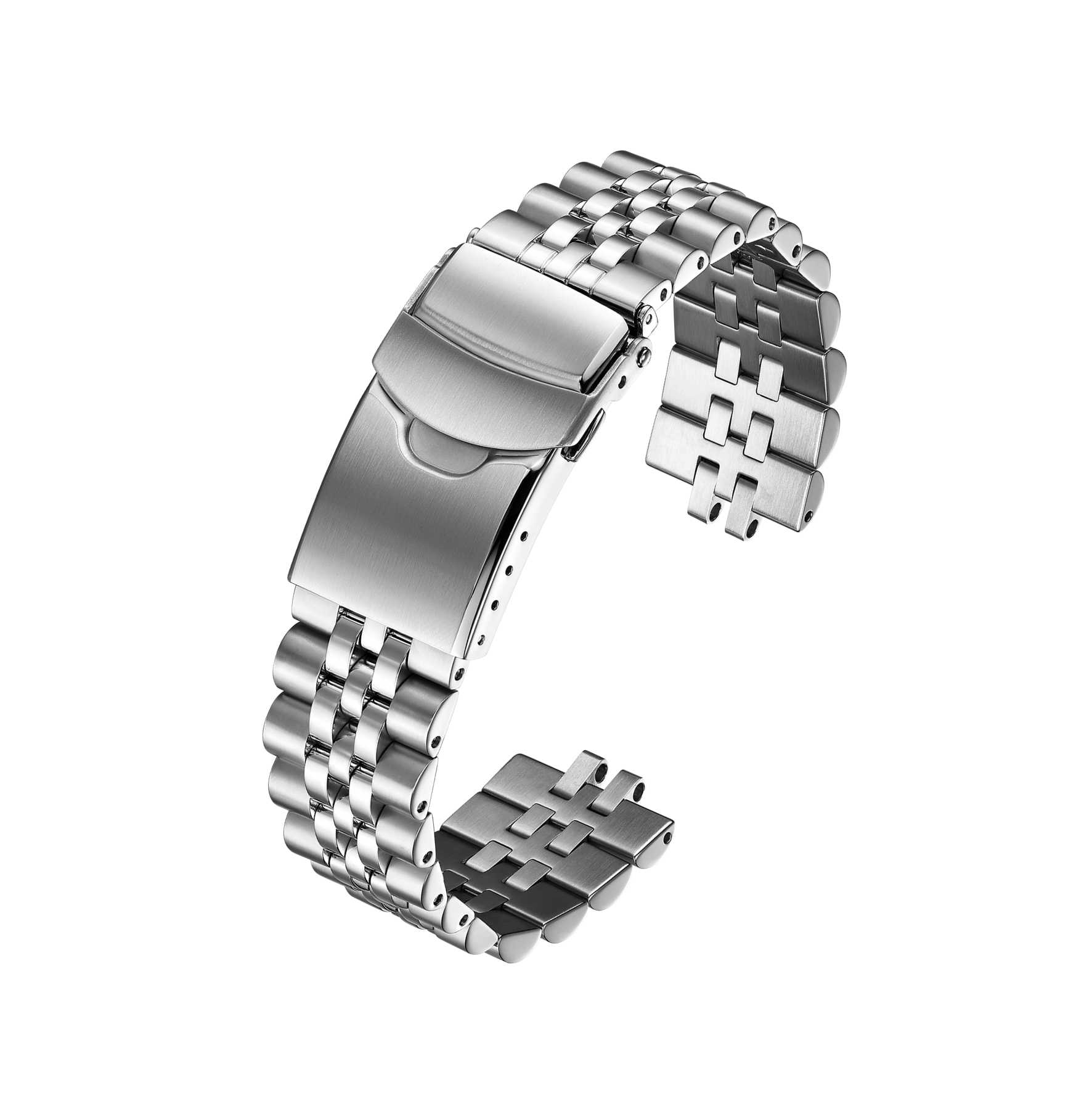
Strategic Sourcing of Stainless Steel Watch Bracelets
A high-quality watch bracelet is far more than a simple fastening band, it is a critical engineering component that defines the overall wearer comfort, balance, and perceived value of a timepiece. Many brand owners focus their development budgets almost exclusively on the watch head, only to realize late in the process that a substandard bracelet can ruin the user experience. Sourcing premium watch bracelet components requires an in-depth understanding of material grades, link articulation geometry, and finishing methods. A systematic approach to selecting suppliers and verifying technical specifications ensures that the final bracelet complements the watch case perfectly in both aesthetics and mechanical performance.
Selecting Metal Alloys and Verifying Chemical Composition
The majority of professional watch bracelets are constructed from stainless steel due to its balance of tensile strength, machinability, and corrosion resistance. When drafting technical requirements, it is essential to specify the exact metal alloy to be used.
316L Stainless Steel: The standard alloy for luxury watchmaking, offering excellent resistance to perspiration and chloride corrosion, alongside hypoallergenic properties.
904L Stainless Steel: A higher-alloy steel containing additional chromium and copper, providing extreme acid resistance and an exceptionally bright polish, though it requires specialized, heavier machining tooling.
Titanium Alloys: Ideal for sport or tactical models, offering a high strength-to-weight ratio, though the material is prone to surface scratching unless treated with a hardening coating.
Verifying that the supplier uses genuine materials is vital, as lower-grade alloys containing high carbon content can rust over time when exposed to marine environments.
Engineering Link Articulation and Screw Pin Tolerances
The flexibility and drape of a metal watch bracelet depend on the design and tolerances of the individual links and their connecting pins. Sourcing teams must choose between different link construction styles.
| Link Construction Style | Tooling Requirement | Durability Level | Aesthetic and Tactile Quality |
|---|---|---|---|
| Folded Metal Sheet | Low Tooling Cost | Low Durability | Hollow feel, prone to hair-pulling |
| Semi-Solid Links | Medium Tooling | Medium Durability | Lightweight but lacks premium weight |
| Fully Solid Machined | High CNC Investment | Maximum Durability | Solid, heavy feel with smooth articulation |
For premium solid bracelets, connecting pins should utilize threaded screw-in bars rather than friction-fit split pins. The internal threads inside the link must be precisely tapped to prevent screws from backing out due to daily wrist movement, which is a common failure point in poorly engineered bracelets.
Tolerance Alignment at the Case End Link Connection
The interface where the bracelet meets the watch case, known as the end link, is one of the most difficult integration points in watch manufacturing. A poorly fitted end link creates an unsightly gap and allows rotational play that can damage the case lugs. Sourcing specifications should insist on solid end links that are custom-machined via CNC to match the exact curvature and lug profile of the specific watch case. The clearance tolerance between the end link and the inner lug walls should be held within a narrow range, typically between 0.015 mm and 0.03 mm. Achieving this tight clearance requires constant coordination between the case manufacturing department and the bracelet production facility.
Practical Case Study of a Clasp Tolerance Correction
During a production run of a solid three-link stainless steel bracelet, an engineering team observed that a portion of the safety folding clasps exhibited inconsistent latching force. Some clasps required excessive thumb pressure to close, while others released too easily. The quality control engineers analyzed the stamping die used for the clasp inner blades and found that tool wear had caused a slight alteration in the curvature radius of the tension arm. This small variation affected the spring tension of the folding mechanism. The production team immediately reworked the stamping tooling and introduced a digital force-gauge test to measure the opening and closing resistance of every clasp batch. This adjustment ensured a consistent tactile click and demonstrated why ongoing tool maintenance is critical for functional components.
Clasp Engineering and Micro Adjustment Mechanisms
The clasp is the mechanical heart of the bracelet and the component that experiences the most frequent physical interaction. Sourcing checklists should detail the specific clasp mechanism required, whether it is a simple butterfly clasp for dress models or a heavy-duty folding clasp with double-push button safety releases for sports watches. To enhance wearer comfort, modern bracelets increasingly feature integrated micro-adjustment mechanisms within the clasp. These systems allow the wearer to extend or shorten the bracelet length in small increments without using tools, compensating for wrist swelling in warm weather and significantly elevating the overall product experience.
Partnering with an experienced components specialist like Baoruihua ensures that every aspect of bracelet engineering is executed to perfection. The facility's integrated manufacturing divisions span precision CNC milling, stamping, and automated polishing, enabling the creation of solid bracelets and clasps that fit watch cases flawlessly and provide an exceptional tactile experience.
Table of Contents
- Strategic Sourcing of Stainless Steel Watch Bracelets
- Selecting Metal Alloys and Verifying Chemical Composition
- Engineering Link Articulation and Screw Pin Tolerances
- Tolerance Alignment at the Case End Link Connection
- Practical Case Study of a Clasp Tolerance Correction
- Clasp Engineering and Micro Adjustment Mechanisms