
 EN
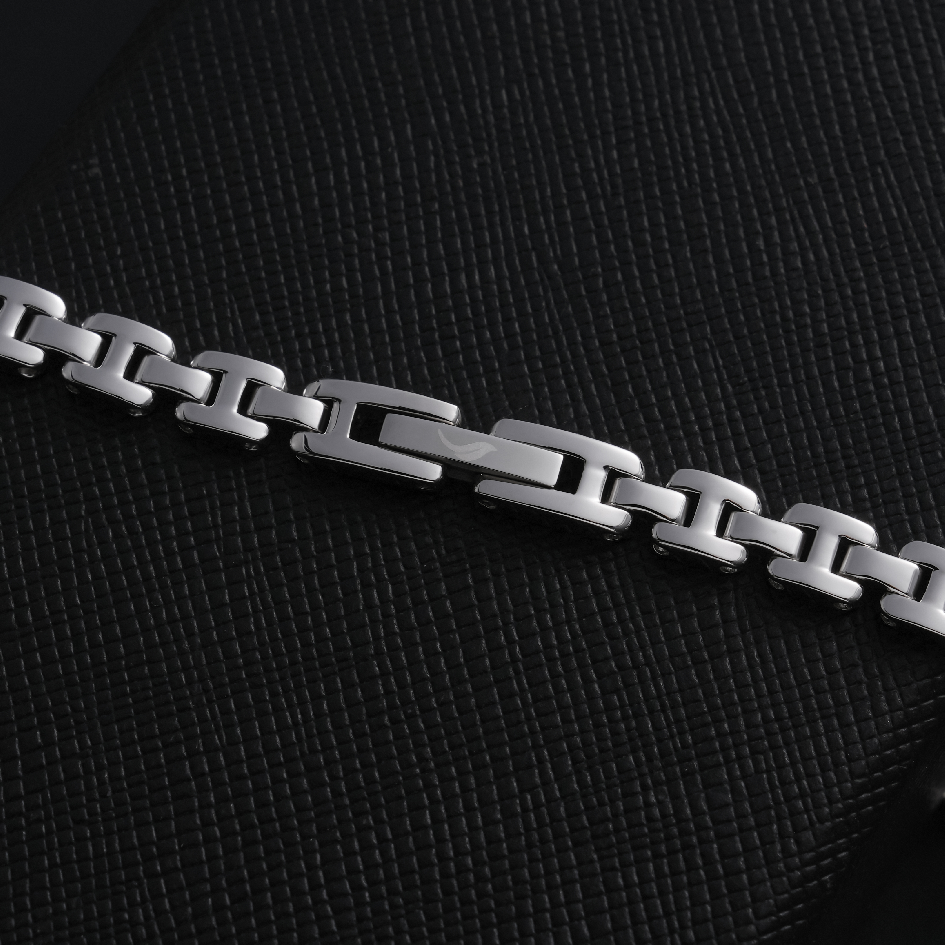
Walk through any watch buckle catalog and the options look interchangeable. Tang buckles, deployment clasps, butterfly clasps, and a few specialty designs, all shown at the same scale against a white background. The visual similarity hides the fact that each type makes different demands on the strap it pairs with, the tooling that produces it, and the QC that catches its failure modes.
For OEM watch projects, buckle type selection usually happens alongside strap design. The strap carries the visual identity, and the buckle is picked to match its width and thickness. That order works most of the time. It breaks down when the buckle type is treated as a style decision rather than a compatibility decision. A deployment clasp that suits a thick leather strap will feel wrong on a thin one. A butterfly clasp tuned for a metal bracelet end link will not behave the same way on a rubber strap. The buckle and the strap have to be evaluated as a pair.
What follows is a practical comparison of the buckle types that dominate strap pairings, with attention to where each one works, where it struggles, and what production has to control to keep it consistent.
Tang Buckles: Simple Design, Real Wear Limits
The tang buckle is the oldest and simplest design in the category. A frame, a tongue, and a spring bar. The strap end passes through the frame, the tongue seats into one of the holes, and the fit is set by the hole position.
The strengths are real. Tang buckles are easy to use, easy to replace, and inexpensive to produce. They work across a wide range of strap materials because the tongue and hole arrangement tolerates small thickness variations. That tolerance is also the design's main weakness. A tongue that fits one strap hole snugly can feel loose on another, and a hole that sees regular use will ovalize over time. Once the hole stretches, the buckle no longer holds position and the strap starts slipping.
Production control for tang buckles centers on three things: tongue width relative to hole diameter, hole position consistency across the strap, and edge finish on the frame. A frame with a sharp inner edge will cut into the strap over months of use, and the damage is usually noticed only when the strap needs replacing.
Deployment Clasps: Longer Life, Tighter Tolerances
The deployment clasp folds the strap in half and closes with a latch mechanism. It is the type most often chosen when the strap is expected to stay on the wrist for long periods, because the strap does not have to be unbuckled and re-buckled every time.
That convenience comes with tolerance demands. The clasp has a hinge, a latch, and often a push-button release, and each of those subassemblies adds a dimensional requirement. The hinge axes have to stay parallel. The latch has to engage at the same point on both sides. The push buttons have to return to position reliably. A deployment clasp that feels crisp on the sample can feel vague in production if any of these drifts.
Deployment clasps also interact with strap thickness more directly than tang buckles. The folded strap end has to clear the clasp body without binding. A strap that is slightly too thick will make the fold stiff and the closure hard to complete. A strap that is slightly too thin will let the clasp close loosely. That narrow window is why deployment clasps are often paired with straps that have a defined thickness spec.
Butterfly Clasps: Clean Look, Synchronization Challenges
The butterfly clasp sits between the tang and the deployment in complexity. It uses two folding leaves that meet in the middle and latch against each other. The result is a cleaner profile on the wrist and a closure that feels more deliberate than a tang buckle.
The main production challenge is synchronization. Both leaves have to engage at the same point in the closure cycle. If one leaf engages before the other, the clasp can appear closed while sitting only half-latched. That failure mode is subtle and easy to miss in a visual check, because the clasp looks seated from the outside. It shows up later as a clasp that pops open under load or needs a second press to close.
Butterfly clasps also tend to have a tighter fit window than tang buckles because the strap has to pass through both leaves. Strap end thickness and edge finish matter more here, and a strap that works with one butterfly clasp design may not work with another even when the nominal dimensions match.
| Buckle type | Best suited strap pairing | Main production focus | Common failure mode |
|---|---|---|---|
| Tang buckle | Leather, rubber, wide thickness range | Tongue width, hole position, frame edge | Hole stretch, strap slip |
| Deployment clasp | Defined-thickness leather, long-wear straps | Hinge parallelism, latch engagement | Stiff fold, soft latch |
| Butterfly clasp | Mid-thickness leather, clean-profile straps | Leaf synchronization, strap clearance | Half-latch, pop-open |
A Case Where the Buckle Type Fit the Sample but Not the Batch
One anonymized case involved a strap collection that used a butterfly clasp across three leather finishes. First articles passed cleanly. The clasp closed with a consistent click on every sample, and the strap ends cleared the leaves without binding.
A later production run showed a pattern. On one finish, the clasp needed a second press to close. On another, it popped open under light load. The clasp dimensions were inside tolerance on every unit checked. The strap end thickness had drifted between tannages, within the strap supplier's own spec. Neither part was out of tolerance. The combination was.
The root cause was that the butterfly clasp had been validated against a single strap sample rather than against the thickness range the collection would actually use. The clasp was fine. The validation method was not. The fix was to define the strap end thickness range first, then check the clasp across the low, middle, and high ends of that range before approving the pairing. That approach catches combination failures that individual part inspections cannot.
What Buckle Type Selection Costs Beyond the Unit Price
At the unit level, a tang buckle is usually the cheapest option, a butterfly clasp sits in the middle, and a deployment clasp is the most expensive. That ranking is accurate and also incomplete. The cost that matters over the product life includes returns, complaints, and the strap replacement rate that each type drives.
A tang buckle that lets the strap slip after a few months generates a replacement request. A deployment clasp with a soft latch generates a complaint about the clasp popping open. A butterfly clasp with a synchronization issue generates a complaint that the clasp does not close properly. Each of those has a cost that does not show up in the unit price comparison.
The right choice depends on how the strap is meant to be worn, how long it is expected to last, and how much the closure feel matters to the product positioning. For daily-wear straps, the deployment clasp's longer service life often justifies its higher unit cost. For fashion straps that will be changed frequently, the tang buckle's simplicity is usually the better fit. For collections that need a clean profile and a deliberate closure, the butterfly clasp is the practical middle ground.
Small volume orders follow the same quality standards as large ones. The inspection plan, the AQL levels, and the sample sizes do not change with batch size. What changes is unit price, because tooling setup, fixture preparation, and inspection planning are fixed costs that spread across fewer pieces. That price gradient is a normal outcome of fixed cost allocation, and it is worth planning for early when a collection may need more than one buckle type.
A components specialist that adheres to these standards will usually be able to map each buckle type to the strap range it actually suits, rather than to a single sample. That mapping is what prevents the late-stage surprises that show up when buckle type and strap specification are validated separately.
For projects where buckle type needs to line up with strap material, thickness range, and closure feel, working with a supplier that builds its QC around those pairings reduces late surprises. Burriva, short for Baoruihua (Dongguan) Precision Technology Co., Ltd., operates a component-focused facility with over 20,000 square meters of floor space, covering multi-axis machining, CNC milling, stamping, automated polishing, and dimensional inspection across incoming, in-process, and outgoing stages. Workflows are segregated by project, and CAD file access is controlled by job role. Teams working through buckle and strap pairing specifications are welcome to discuss their requirements.