
 EN
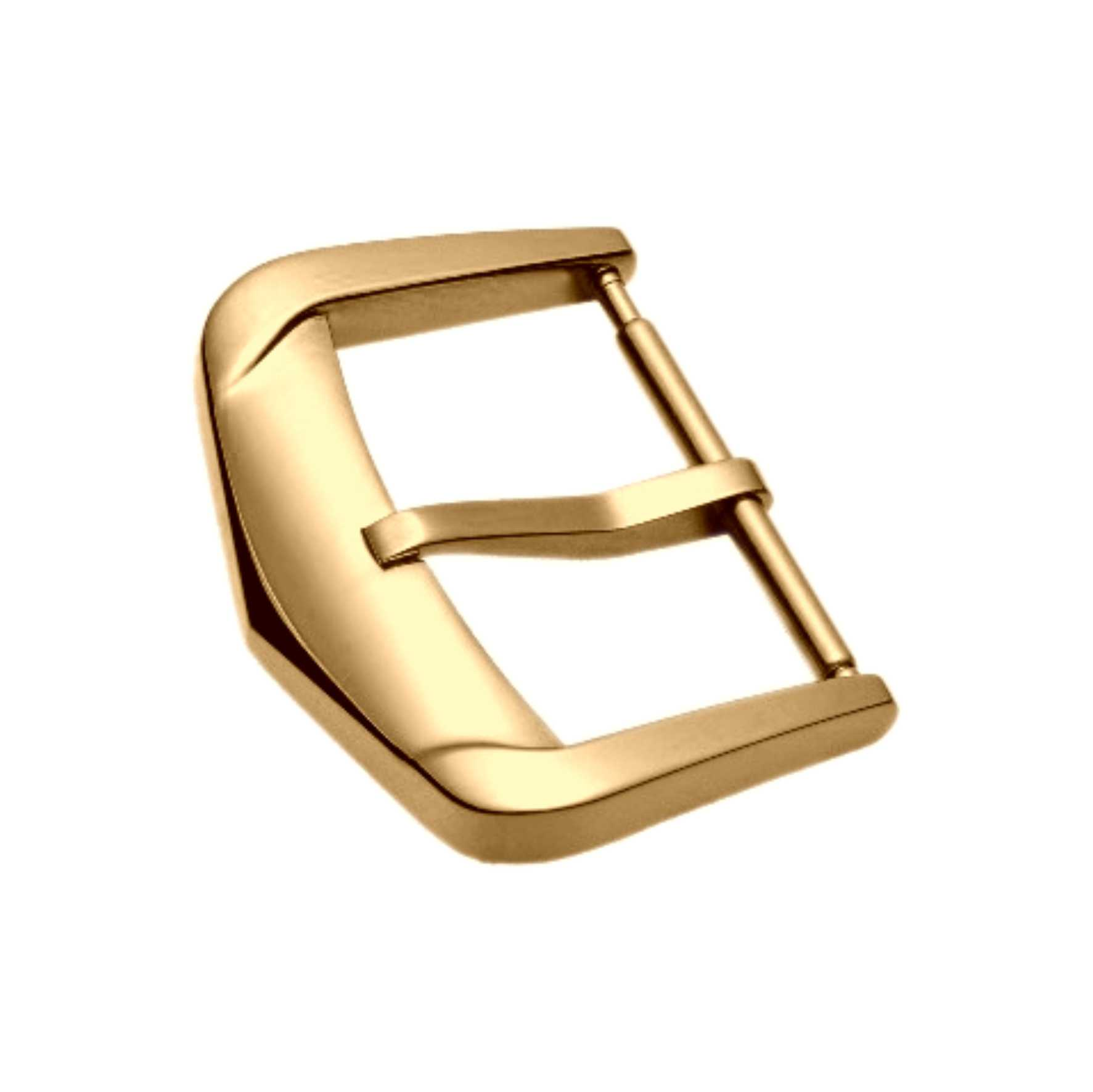
Buckle size sounds like a settled question. The strap width is fixed, the buckle has to match, and the drawing is straightforward. Then samples arrive, the buckle fits one strap and not another, and the conversation turns into a debate about whose tolerance is wrong.
The root issue is that buckle size is not one dimension. It is a small set of them that interact: the inner gap between the buckle ears, the tongue width, the bar position, and the thickness of the strap end that has to pass through. Each one is easy to hold in isolation. Getting all of them to work together, across every strap in a collection, is where compatibility problems start.
For OEM watch projects, the buckle is usually specified late. The strap gets designed first because it carries the visual identity, and the buckle follows as a hardware detail. That order puts the buckle in a reactive position, where it has to accommodate whatever the strap end turned out to be. When the strap end thickness varies across a collection, the buckle that works for the thickest strap may rattle on the thinnest one. Compatibility, in that case, is not a buckle defect. It is a sequencing decision.
Inner Width, Strap Width, and the Gap That Decides Fit
The most familiar dimension is the inner width between the buckle ears, and the strap width that has to sit inside it. The naive reading is that the two numbers should match. In practice, a small clearance is built in on purpose, because a strap that fits with zero clearance will bind when it flexes.
Too much clearance and the buckle slides off-center, the strap edge rubs against the ear, and the whole assembly feels loose. Too little and the strap has to be forced in, which puts stress on the stitching and the leather edge. The window is narrower than most people expect, and it shifts with strap material.
A leather strap compresses slightly under load. A rubber or silicone strap does not. A metal bracelet end link behaves differently again, because it does not compress at all and its edge finish has to clear the buckle ear without contact. A single buckle inner width cannot serve all three equally well. That is why collections that mix strap materials often need more than one buckle variant, even when the visual design stays the same.
| Fit factor | Typical range to watch | What goes wrong if missed |
|---|---|---|
| Inner width vs strap width | Tight clearance band | Binding on flex, or side-to-side play |
| Strap end thickness | Must clear the gap at the tongue | Buckle will not close, or closes loosely |
| Tongue width vs strap hole | Slightly under hole diameter | Hole stretch or tongue binding |
| Bar position | Centered relative to ear depth | Strap sits crooked under load |
| Ear edge radius | Small radius, consistent | Edge cuts into strap over time |
Strap End Thickness and the Closure That Fails Late
Strap end thickness is the dimension that causes the most late-stage problems, because it is the one most likely to change after the buckle is approved. Leather varies by tannage and by batch. A strap end that measured one thickness in the first sample can come in noticeably thicker on a later run, and the buckle that closed cleanly before will suddenly resist.
The mechanism is geometric. The strap end has to bend around the bar and pass under the tongue. If the combined thickness at the fold exceeds the available gap, the closure becomes stiff. If it is well under the gap, the tongue does not press the strap firmly and the buckle feels loose. The usable window is often only a fraction of a millimeter, and it depends on how the strap end is skived or folded.
This is where specifying the buckle before the strap is finalized creates risk. A buckle designed around a nominal strap thickness will behave differently across a collection that varies by material and finish. The practical fix is to define a strap end thickness range, not a single number, and to test the buckle across that range rather than against one sample.
Tongue, Bar, and the Small Parts That Decide Comfort
The tongue is a small part with an outsized effect on how the buckle feels. Its width has to sit slightly under the strap hole diameter. Too wide and the tongue binds, especially on thicker leather. Too narrow and the strap hole stretches over time and the fit loosens. A hole that has ovalized after months of use is usually a tongue width problem that showed up late.
Bar position matters for a similar reason. The bar anchors the strap end, and its position relative to the buckle ear depth decides whether the strap sits straight or pulls to one side. A bar set slightly off center will make the strap sit crooked under load, and the user will feel it as an uneven pull on the wrist.
Edge radius on the buckle ears is the least discussed and most felt. A sharp ear edge cuts into the strap over time, especially on soft leather. A generous radius spreads the contact and lets the strap move without damage. This is a finishing detail, not a dimensional one, and it is easy to skip when the focus is on the numbers. It is also one of the first things a user notices after months of wear.
A Compatibility Case That Only Showed Up in Batch
One anonymized case involved a strap collection with three leather finishes and a single buckle design intended to serve all of them. First articles passed. The buckle closed cleanly on every sample. A later production run showed a pattern of stiff closures on one finish and loose closures on another.
The buckle dimensions were inside tolerance on every unit checked. The strap end thickness had drifted between tannages, which was within the strap supplier's own spec. Neither part was out of tolerance. The combination was. The root cause was that the buckle had been validated against a single strap sample rather than against the full thickness range the collection would actually use.
The fix was not a redesign. It was a change in how compatibility was validated: define the strap end thickness range first, then check the buckle across the range, at the low end, the middle, and the high end. That approach catches combination failures that individual part inspections cannot. It also makes the tolerance conversation between strap and buckle suppliers concrete, because both sides are working from the same range rather than from separate nominal values.
Why Buckle Size Choices Ripple Through Sourcing
Buckle size decisions have a sourcing dimension that is easy to overlook. A collection that uses one buckle across many straps saves on tooling and simplifies inventory. A collection that needs several buckle variants to match strap thickness and material adds tooling and splits the order.
The tradeoff is real, and it is not always resolved in favor of fewer variants. A single buckle that fits most straps but not all creates a compatibility tail that shows up as returns and complaints. Multiple variants cost more up front and reduce that tail. Which is better depends on how wide the strap range is and how much the collection depends on a consistent look.
There is also a supply-side consideration. A components specialist that adheres to these standards can usually advise on where a single buckle is realistic and where a second variant pays for itself. That advice depends on knowing the strap range, the material mix, and the finish requirements, not just the buckle drawing.
Small volume orders follow the same quality standards as large ones. The inspection plan and the AQL levels do not change with batch size. What changes is unit price, because tooling setup and inspection planning are fixed costs that spread across fewer pieces. That price gradient is normal, and it is worth planning for early when a collection may need more than one buckle variant.
For projects where buckle size needs to line up with strap width, strap end thickness, and material behavior across a collection, working with a supplier that builds its QC around those interactions reduces late surprises. Burriva, short for Baoruihua (Dongguan) Precision Technology Co., Ltd., operates a component-focused facility with over 20,000 square meters of floor space, covering multi-axis machining, CNC milling, stamping, automated polishing, and dimensional inspection across incoming, in-process, and outgoing stages. Workflows are segregated by project, and CAD file access is controlled by job role. Teams working through buckle and strap compatibility specifications are welcome to discuss their requirements.